 AsaaseYaa
Fall armyworm
A caterpillar that hides in the centre of young maize and eats the leaves and growing point.
What it looks like
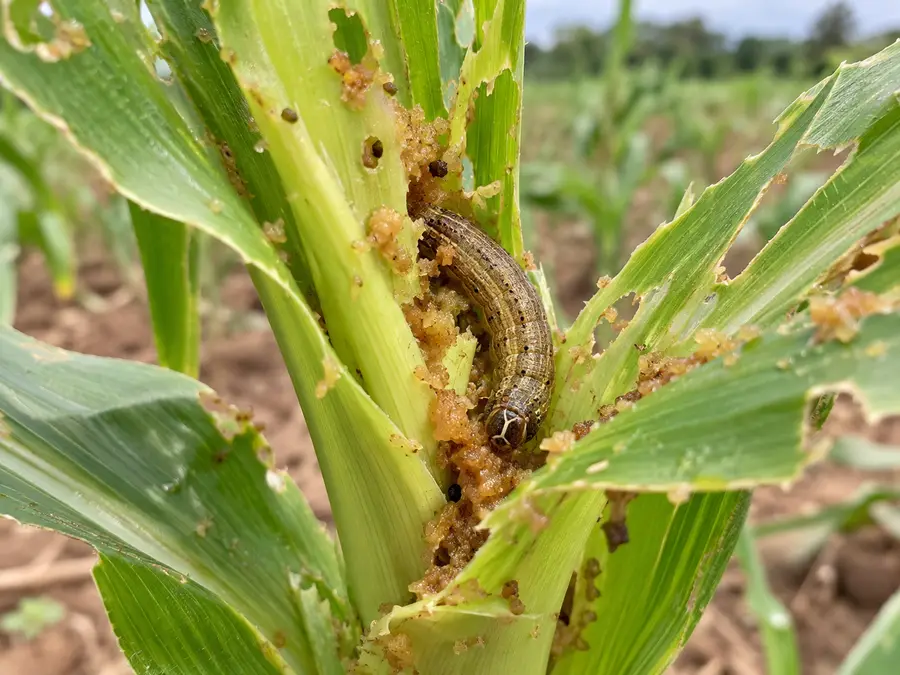
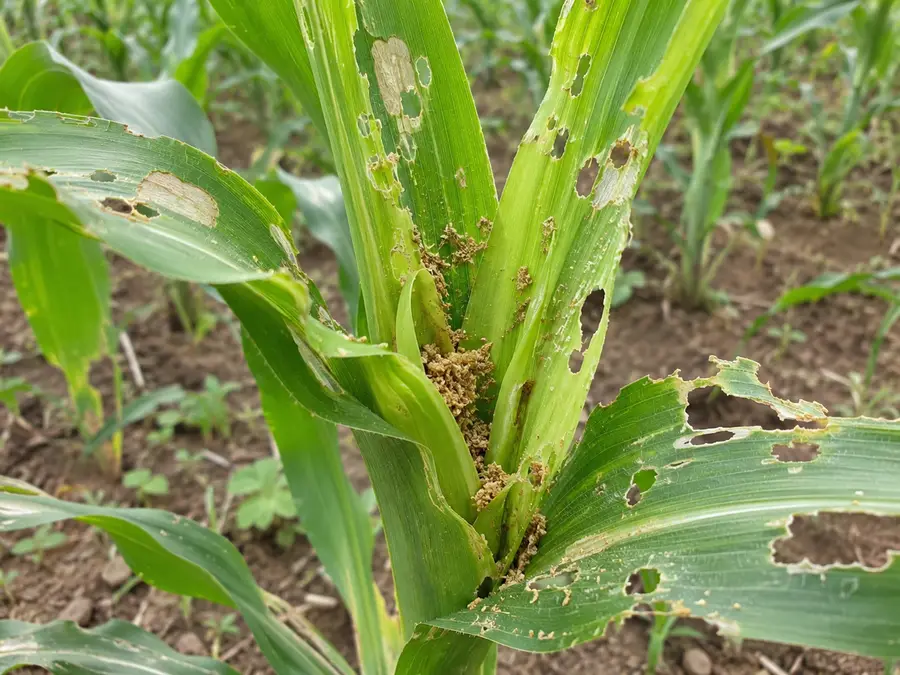
Every field looks a little different. If you are not sure, ask in the app’s Farmers, or ask an agronomist.
When it comes
What to look for
Walk the field every 3–4 days. Look at the young leaves — if they have ragged holes or look chewed, you have caterpillars. Bend down and check the base of each plant: small black pellets (looks like coarse pepper) means Fall Armyworm has been there. If more than 1 in 5 plants is damaged, spray with a recommended pesticide that evening.
Twice a week, look in the centre of each plant where the new leaves come out. If you see chewed leaves and tiny black droppings, that's Fall Armyworm. Pull a few plants apart at the bottom — if the middle leaf is wilting and brown while others are green, that's a stem-eating worm inside. Check under leaves for tiny green or black bugs in big groups (aphids).
What to do
The most destructive pest. Control with systemic insecticides (e.g. Emamectin benzoate, alternating active ingredients to prevent resistance) applied early morning or evening.
Insects are eating the leaves
Caterpillars, beetles or grasshoppers chew holes and bite the edges.
- Check early in the morning, when insects are slow. Pick caterpillars off by hand into a tin of soapy water.
- Look inside the funnel of young maize — fall armyworm hides there.
- If many plants are hit, spray a neem mix, or ask the agro-shop for a caterpillar spray made for your crop and follow the label.
Don’t: Do not spray every week "just in case". Spray only when you see the pests.
Also watch for
General advice from crop guides for Ghana. Before you spray, ask your agro-input dealer for a product registered for this pest, read the label, and wear gloves. For a serious attack, call your district agriculture office or an agronomist.
Catch it early
AsaaseYaa reminds you when to check your crop for pests, and shows you what to look for. Free.